Vietnam and Colonialism
3/24/2026

I’m continuing to revisit history from the perspective of my life lessons to this point.
This quote captures what I’ve been struggling to understand. “Just a quiet recognition that the story you were given about the world no longer fits what you are seeing.”
There is a moment in the life of every thinking person when something subtle begins to shift. Not dramatically. Not with revelation or spectacle. Just a quiet recognition that the story you were given about the world no longer fits what you are seeing.
At first it feels small. A question that won’t quite leave you alone. A contradiction that keeps resurfacing. A feeling that the explanations everyone else accepts no longer settle comfortably inside your own mind.
Discernment rarely arrives all at once. It arrives as a slow accumulation of noticing. And noticing changes things.
Something subtle begins to shift
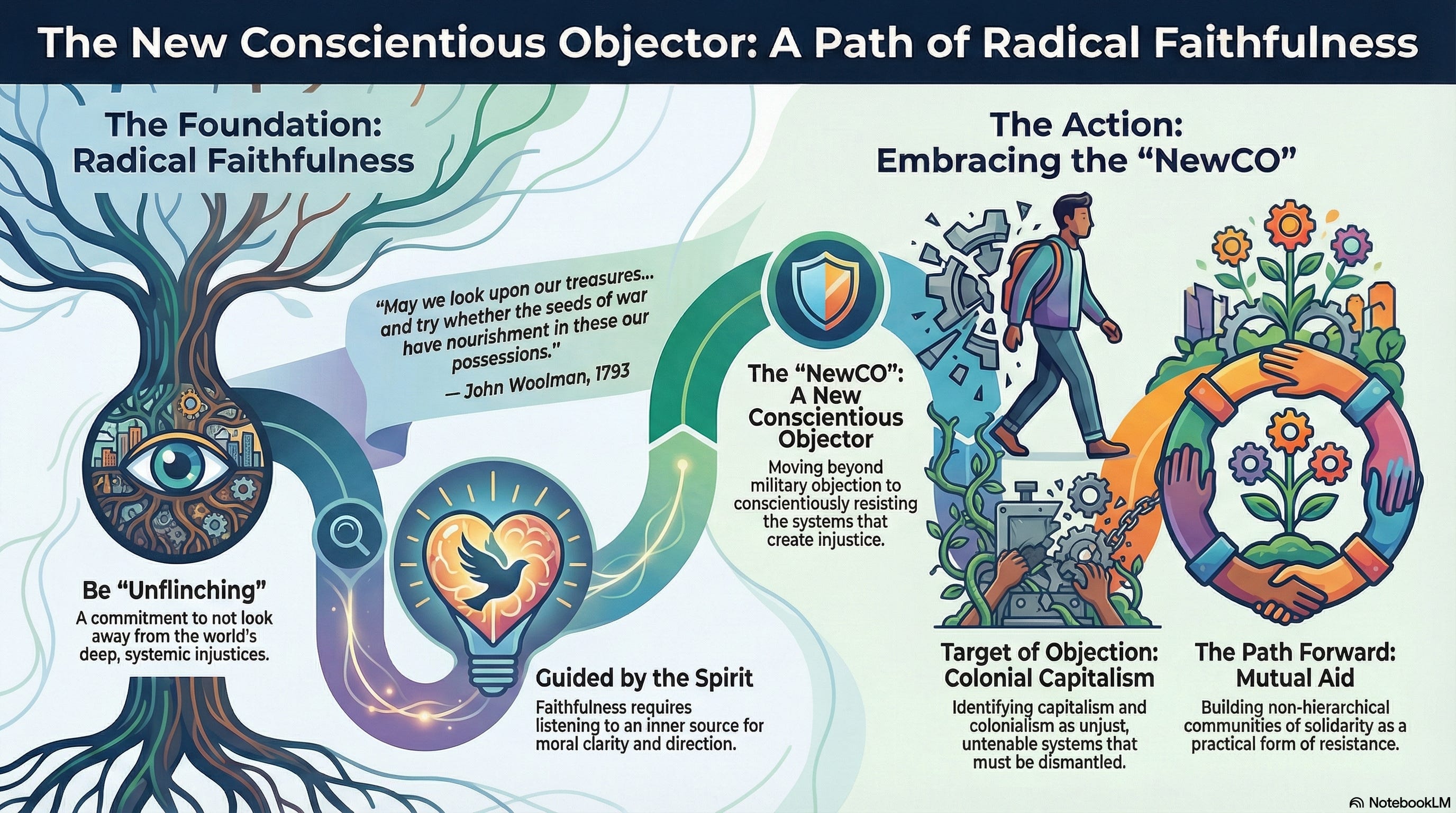
The subtle shift for me has been the growing awareness of the injustices and violence of our current political and economic systems. And discovering the root causes of the injustices come from the settler-colonization of this land. That Quakers were part of that colonization, and that the colonization continues today. That we Quakers need to find ways to escape the current unjust political and economic systems by actively objecting to them. That means replacing Christian colonial capitalist violence with Mutual Aid, LANDBACK, and the abolition of police and prisons.
The more I learn about colonialism, the more the subtle shift has begun to take on a life of its own. It is no longer subtle.
The North Vietnamese Perspective: Decolonization
At the time of the US involvement in the Vietnam War, the American public was told the purpose of the war was to prevent the spread of communism. Many of us felt the reason was for oil.
But for Ho Chi Minh and the Viet Cong of North Vietnam, the “real purpose” was not necessarily a global Communist revolution, but national sovereignty.
· Independence: After decades of French colonial rule and Japanese occupation, many Vietnamese saw the war as a continuation of their fight for independence.
· Unification: The goal was to remove foreign influence (the U.S.) and reunify a country that had been artificially split at the 17th parallel.